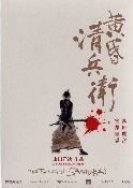
| english title | Twilight Samurai |
| original title | Tasogare seibei |
| french title | Le Samourai du crépuscule |
| year | 2002 |
| country | Japan |


| director | YAMADA Yoji - 山田洋次 | |
 actor
actor | SANADA Hiroyuki | Seibei Iguchi |
|
| MIYAZAWA Rie - 宮沢りえ | |
| TANAKA Min | Yogo Zenemon | |
| YOSHIDA Kenji | ||
| TAMBA Tetsuro - 丹波哲郎 | Tozaemon Iguchi | |
| KISHI Keiko | Ito | |
| OMI Toshinori | ||
| KITAYAMA Masayasu | ||
| SATO Masahiro | ||
| AKATSUKA Makoto | ||
| NAKAMURA Baijaku | ||
| KANBE Hiroshi | ||
| FUKIKOSHI Mitsuru | ||
| YAMAZAKI Takashi | ||
| KOBAYASHI Nenji | Choubei Kusaka | |
| OSUGI Ren - 大杉漣 | ||
| FUKAURA Kanako - 深浦加奈子 | ||
| producer | FUKASAWA Hiroshi | |
| YAMAMOTO Ichiro | ||
| NAKAGAWA Shigehiro | ||
| composer | TOMITA Isao | |
| scriptwriter | YAMADA Yoji - 山田洋次 | |
| ASAMA Yoshitaka | ||
| original story | FUJISAWA Shuhei | |
| artistic director | NISHIOKA Yoshinobu - 西岡善信 | |
| DEGAWA Mitsuo | ||
| editor | ISHII Iwao | |
| cinematographer | NAGANUMA Mutsuo | |
| sound director | KISHIDA Kazumi | |
| costumes | KUROSAWA Kazuko |
| genres | drama chambara |
| duration | 2H09 |
| production studio | Shochiku |
original title たそがれ清兵衛
At the start of the film, the main character, Iguchi Seibei, becomes a widower as his wife dies from tuberculosis, a common illness at the time. His samurai colleagues give him the condescending nickname "Tasogare Seibei," or "Twilight Seibei," because when it gets dark in the evening, he disappears to look after his senile elderly mother and two young daughters, Kayano and Ito, instead of going out with the others.
Things change when Seibei's childhood friend and the sister of one of his samurai friends, Tomoe, returns to town. Recently divorced from an abusive husband, she quickly bonds with Seibei's children. When her former husband returns in search of her, Seibei defends her honor in a duel, beating the husband, Koda, with only a bokuto (wooden practice sword) even when Koda battled with a steel sword. However, when Tomoe's brother, Iinima Michinojo, asks Seibei to marry her, Seibei refuses, citing his low standing and how he doesn't want her to live in poverty.
The final turning point in the film happens when Seibei's clan, having heard of his prowess with a sword, wants him to kill a former samurai retainer, Yogo Zen'emon, who refused to commit seppuku after acting against the interests of the clan. Seibei is also promised a rise in standing for this service. He is reluctant at first, but has no choice but to agree to do the task. Seibei's kodachi (short sword) fighting style is matched up against Zen'emon's ittōryū (single long sword) swordsmanship in an intense duel indoors. In the end, Seibei kills Zen'emon and finally gets to marry Tomoe.
In a brief epilogue, his younger daughter explains that their happiness was not to last: he died three years later in the Boshin War, Japan's last civil war.